
IN BETWEEN DRINKS:
Beaches, Bars and Other Stories
By Gary E. Marsh
Preface
This is not a story about Henry Ford Johnson during a three-decade span of it. Rather, it’s a linear account of things that happened as Henry navigated an otherwise normal life. In between drinks, that is. You see, when we drink — whether alone, with a companion or in the company of others — life as we know it stops. Of course, it doesn’t literally, but during periods of drinking, we are in the moment, fully immersed in our private thoughts or engaged with others, and nothing more.
From his coming-of-age early days on his own, into full adulthood, career development, romances and travel, to settling down with a family and suburban living, Henry eventually reaches the all-too-familiar midlife crisis. Looking back, hubris and hedonism – each a vice and a virtue, were frequently in the mix.
Check back for the audio book – it should be available sometime soon.
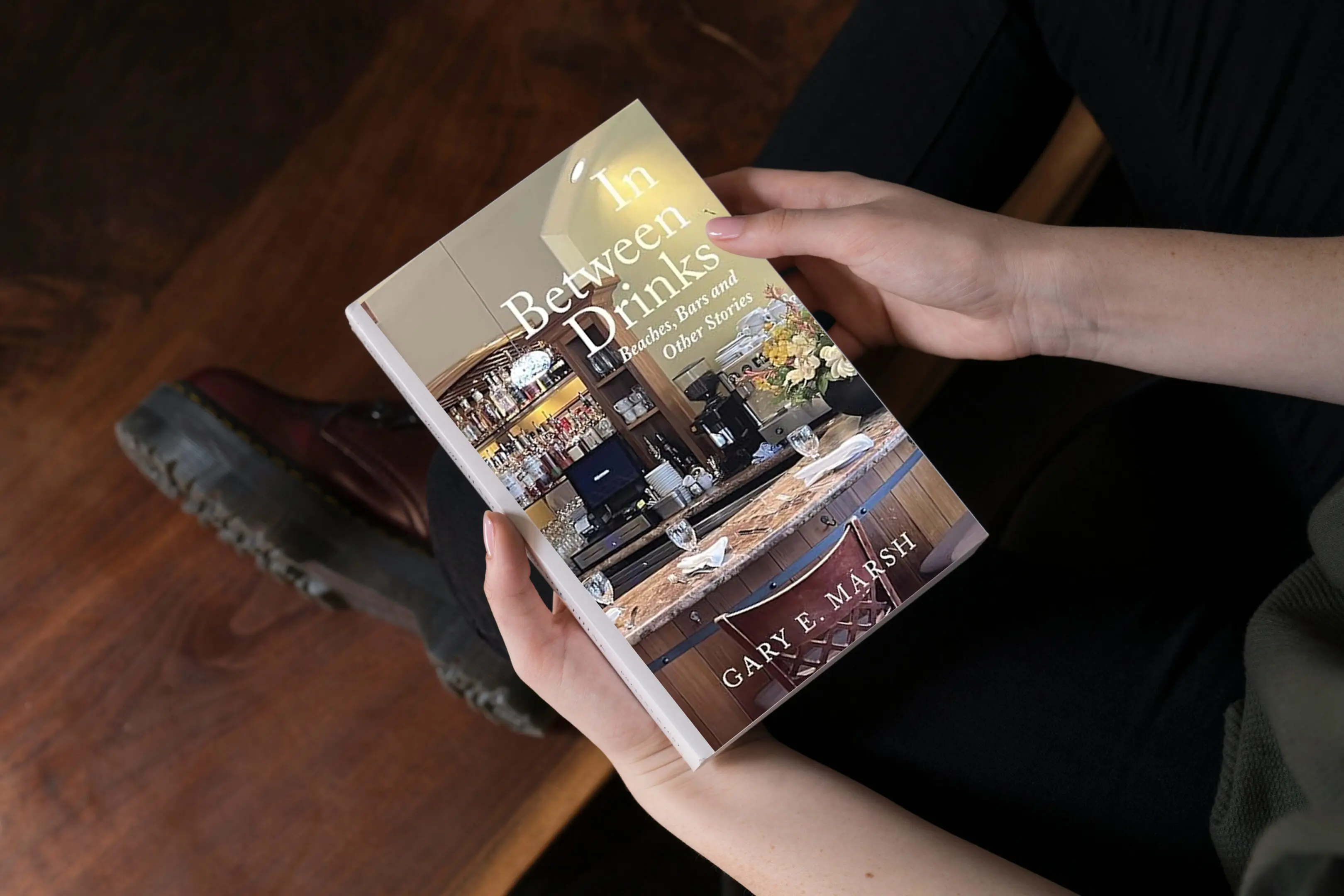
Table of Contents
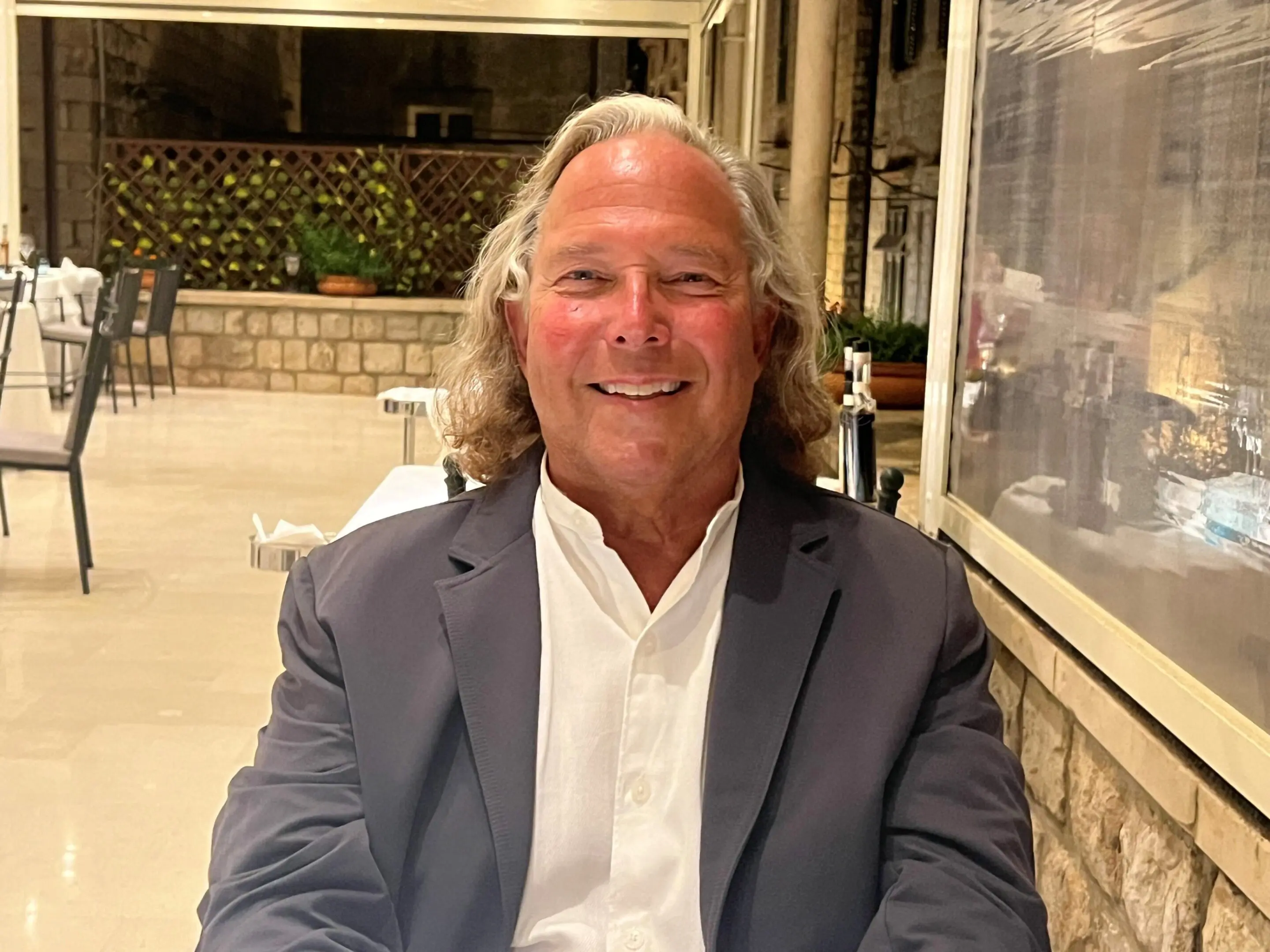
About The Author
Gary Marsh started his professional career in commercial/industrial equipment sales while freelance writing on the side. A job as a business journalist followed, which evolved into a nationwide corporate communications position. Moving on, for over two decades, Gary has served businesses in a marketing/public relations consulting role. Mirth and mischief have been constants throughout his life, and he’s been telling stories since he was a young boy. He lives in Northern California’s wine country, not far from the coast.
Introduction
Henry is running on the Chautauqua Trail at the base of the five Flatirons along the east slope of Green Mountain.
Geologists estimate the age of these rocks as 290 million to 296 million years; they were lifted and tilted into their present orientation between 35 million and 80 million years ago during the Laramide Orogeny, which was a period of mountain building in western North America that started in the Late Cretaceous 70 million or 80 million years ago. It was the geologic period that featured the major tectonic events that formed the Rocky Mountains. The Flatirons are within the City of Boulder Open Space and Mountain Parks system. Naturally, they are popular destinations for hikers, runners and rock climbers, with rock grades ranging from easy (5.0) to world-class (5.14b).
Henry is running up the trail toward the Flatirons and will then run south along the base of the rocks on Mesa Trail until it connects with the NCAR (National Center for Atmospheric Research) Trail, where the research and development center is located. The NCAR Trail goes past the Mesa Laboratory, turns east and downhill to Table Mesa Drive, a city road that will take Henry to the house that he shares with Lauren. The residence is located near the Boulder Public Library, George Reynolds Branch, a few blocks from S. Broadway, the major north-south artery on the west side of Boulder that parallels the University of Colorado a few miles to the north and cuts through the heart of downtown Boulder at Canyon Boulevard, Walnut Street, Lawry Lane, Pearl Street, Morrison Alley, Spruce Street and Pine Street.
Henry is running like he runs six or seven days a week, usually for 70 or 75 minutes at a time, and always on mountain trails. He is running and not thinking. Henry is clearing his head as he runs, like emptying a suitcase when you arrive to your destination, or like taking out the trash. Out with the garbage, all the tasks that have to be done, the meaningful and meaningless conversations, the “hi, how are you” greetings, work, love, shopping, cooking, eating, fucking, sleeping. To run is to lose your mind for a brief while, letting go of all the minutia of our daily lives, letting go of your fears, anxieties, narcissistic tendencies, but not your dreams and ambitions. Running is good for dreaming, and dreaming big. Running is Zen, with motion. Yet in this motion, the mind goes to nothingness. Everything is suspended. Time waits.
Years of running and that feeling of life in suspension served as a preface to an experience Henry had after leaving the mountain states to start a career in advertising in San Francisco. It was while on a winter flight to San Diego to visit his mother for her birthday, which he always did. It was a late afternoon flight and as the plane approached the Southern California city and began its descent, looking out the window Henry saw the clouds light up from the setting sun. Orange. Yellow. Faded Crimson. He’s looking out the window sipping the last of a vodka when it occurred to him that life seems to happen in between drinks. Drinking alone is a time of reflection. Even drinking with friends, other than talking, nothing real about life is actually happening.
At bars and in public places, you watch people and observe. Sometimes, things happen. Yet at the time, the observer is only watching, not doing. It’s the coach’s equivalent of calling a time-out — a pause in play. In between drinks, life happens. These stories reflect this point of view.
A long time ago, the Great Bard wrote:
“Our revels are now ended. These, our actors, as I foretold you, were all spirits, and melted into air, into thin air. And like the baseless fabric of this vision, the cold-capped towers, the gorgeous palaces, the solemn temples, the great globe itself. Yes, all which we inherit…shall dissolve. And like this insubstantial pageant faded, leave not a rack behind. We are such stuff as dreams are made on, and our little life is rounded with a sleep.”
William Shakespeare created that for Act 4 of The Tempest. The most readable stories possess the strongest sense of life. When it is good, the pages smell of it…of rotting vegetation, of burning juniper, of roasted chicken, a lady’s perfume. Life happens in manners few of us, if any, can anticipate. For similar reasons, writers write so that you, the reader, can grasp an ephemeral slice of reality, a moment in time, a glimpse of a barn out of a window as your train whirls through a countryside. Usually, what the observer takes in is someone else’s experience, though we as readers often plug ourselves into the story. And like the wisp of cloud in the distant horizon, the moment dissipates while you look away. You are left with this thought: perhaps this slice of reality never happened. Perhaps it did.
Yet somehow, in between drinks, we continue on, and in our own dreams. We are such stuff.
Audio Book
Check back periodically or email the author (check Contact Page) to be notified when the Audio Book becomes available to purchase. The author and his team plan to produce an audio book, eventually.